Running MT5 on a Forex VPS is a single-platform decision: pick a plan with 4 GB RAM, place it in your broker’s data center, run one terminal. Running MT4 alongside MT5, or adding cTrader, or stacking NinjaTrader 8 on top, breaks every assumption single-platform guidance relies on. The 4 GB plan that handles MT5 comfortably swaps to disk the moment a second platform launches. The 2 vCPU allocation that runs one MT5 EA chokes when cTrader’s multi-threaded .NET runtime and NinjaTrader’s C# strategies fire ticks simultaneously. The London VPS that delivers sub-2 ms latency to a London-hosted broker delivers 60 ms to a New York-hosted broker on the same desk.
Multi-platform hosting is a different category of problem, and most VPS comparison articles do not address it. They list MT4 specs, MT5 specs, and cTrader specs in parallel columns without explaining how those resource costs compound when the platforms run together. They treat broker location as a single variable when traders running different platforms with different brokers face two or three simultaneous location constraints. They quote NinjaTrader’s monthly lease price without adding it to the VPS budget. This guide is built around the resource math, the location math, and the cost math multi-platform traders actually have to solve.
The five providers evaluated here were selected because each offers at least one plan tier that genuinely handles the multi-platform workload, defined as 6 GB RAM or more, dedicated CPU cores, NVMe storage, and a location in or near a major broker data center. Plans below 6 GB are flagged where they appear, but the article’s center of gravity is the 6 GB to 8 GB tier where realistic multi-platform setups actually run.
This guide is published by VPSForexTrader and includes VPSForexTrader among the evaluated providers. The same evaluation criteria apply to every provider. Where competitors win on specific dimensions, the article states so directly. The central argument is not that VPSForexTrader is the best provider for every multi-platform trader. The central argument is that the right answer for many multi-platform traders is not one bigger VPS but two regional VPS instances, because broker hubs do not always overlap and 58.95 ms of unavoidable latency between London and New York is a problem that no single VPS can solve.
Methodology
Platform resource figures are drawn from primary sources: MetaQuotes documentation and MQL5 forum measurements (threads 386311 and 445964 for memory consumption and threading models), Spotware’s official cTrader system requirements and the community.ctrader.com forums for documented memory growth behavior, NinjaTrader’s official system requirements page and a forum.ninjatrader.com staff measurement (thread 1196651) for the 222 MB blank workspace baseline, and SharkIndicators’ Computer Selection Guide for per-instrument CPU thread allocation. The 58.95 ms NY4-to-LD4 latency figure traces to an October 2015 Equinix press release on the Hibernia Express trans-Atlantic cable system. Vendor pricing, plan specifications, and operational policies were reviewed in May 2026. Latency claims from any VPS provider are commercially motivated and have not been independently replicated; figures are treated as directional rather than authoritative. SLA percentages are presented as billing commitments, not trading insurance. Nothing here constitutes financial advice.
Platform-by-Platform Resource Requirements
Each platform’s resource consumption has been measured by users in community forums and documented by the platform vendors. The numbers below are the verified ranges multi-platform traders need to plan against. All four platforms run on Windows; no Linux option exists for production use of any of them.
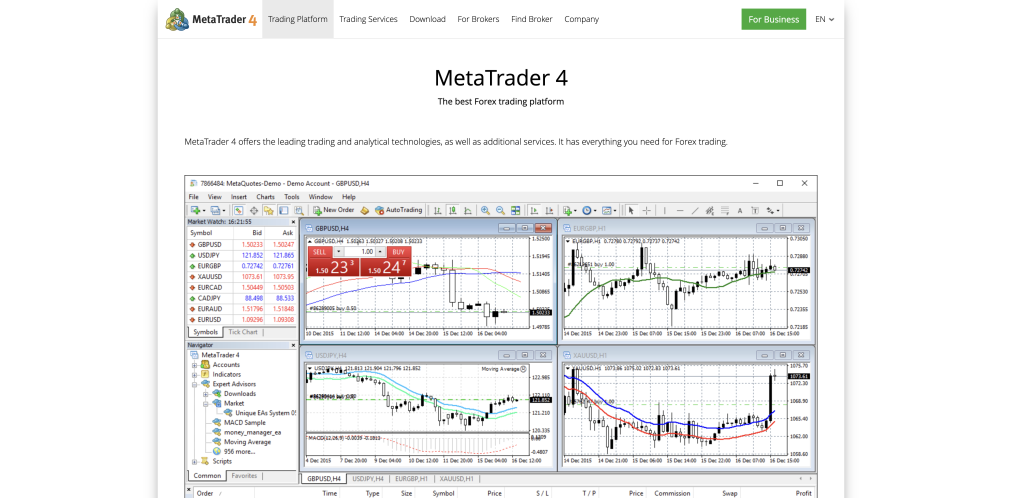
MetaTrader 4
MT4 Build 1470 is the current release as of March 2026; Build 1440 from February 2025 is the minimum supported version since MetaQuotes enforced the July 2025 deadline. The MT4 binary is still 32-bit code in a 64-bit installer wrapper, which caps each MT4 terminal at 4 GB virtual address space regardless of how much physical RAM the VPS provides. In practice this is rarely the limiting factor because MT4 terminals consume 15 to 45 MB at idle minimum, 200 to 500 MB in typical trading configurations with charts and EAs loaded, and 800 MB to 1 GB only under unusual workloads. Per-chart overhead is 30 to 50 MB. CPU is single-threaded per terminal: one MT4 occupies one CPU core for tick processing, indicator calculation, and order management. A trader running multiple MT4 instances for different broker accounts consumes one core per terminal, which is why high-density MT4 setups need more cores than RAM math alone suggests.
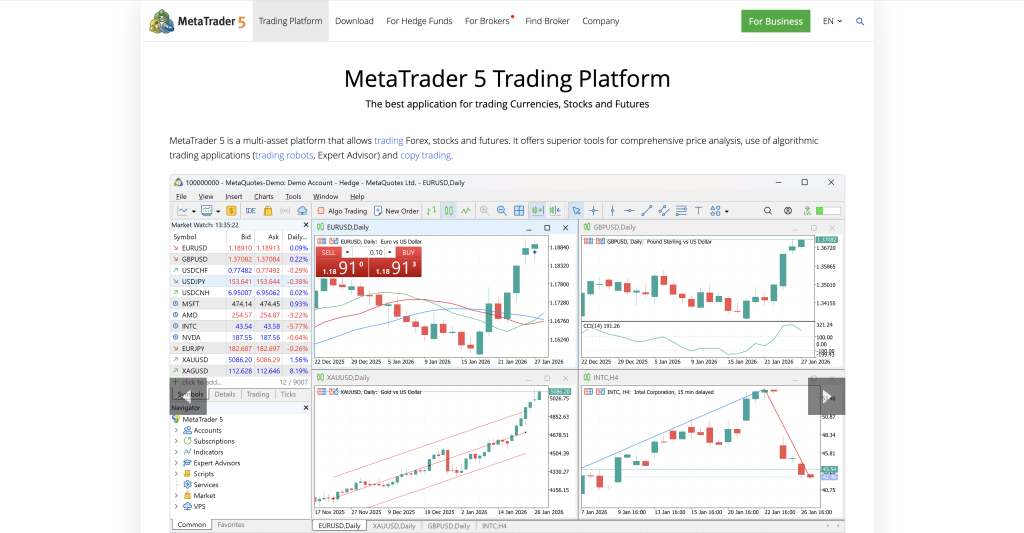
MetaTrader 5
MT5 Build 5800 from April 2026 is the current release; Build 4755 from December 2024 is the minimum supported version. The 64-bit transition occurred in Build 3930 in September 2023, and 32-bit MT5 installers were discontinued on January 1, 2024. MT5 idle baseline runs 100 to 200 MB with community features disabled, 400 to 500 MB with community features enabled. Per-chart overhead is 40 to 70 MB, climbing to as much as 300 MB on M1 timeframes with default Max Bars settings. The threading model spawns one thread per Expert Advisor and one thread per active symbol, plus separate threads for the pumping system and UI. A multi-symbol setup running three EAs across five symbols can occupy four to six logical cores under load. Reduced Max Bars settings (5,000 to 10,000 rather than the 512,000 default) cut per-chart RAM by an order of magnitude and are a standard optimization.
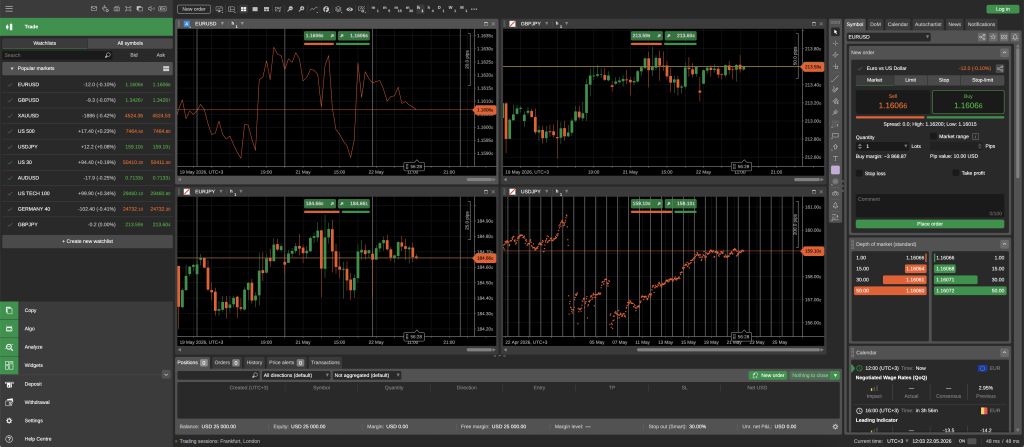
cTrader
Spotware publishes a minimum specification of dual-core CPU and 2 GB RAM running Windows 7 or later. The practical floor for active trading is closer to a modern quad-core processor. Idle baseline RAM consumption is 300 to 500 MB at startup, but cTrader’s documented monotonic memory growth means usage climbs to roughly 1 GB within an hour and 1.6 to 2 GB after 72 hours of continuous operation. Spotware staff have acknowledged this behavior on community forums. Weekly scheduled restarts are mandatory for any multi-platform setup including cTrader. The runtime is multi-threaded .NET, which allocates work across available cores opportunistically. cBots written in C# benefit from cTrader’s multi-threaded architecture more than equivalent MQL5 EAs benefit from MT5’s per-EA thread allocation. cTrader 5.x introduced free Cloud cBot hosting included with the platform, which is a meaningful alternative to VPS hosting for traders running only cBots.
NinjaTrader 8
NinjaTrader’s official system requirements list 2 GHz quad-core 64-bit CPU, 8 GB RAM, DirectX 10, and .NET Framework 4.8. The 8 GB RAM minimum is higher than any other platform in this guide. The blank workspace idle baseline measured directly by NinjaTrader staff is approximately 222 MB. Real-world loaded workspaces consume 1 to 4 GB depending on chart count, indicator load, and historical data depth. NinjaTrader 8 can reach up to 8 GB RAM when Tick Replay is enabled for backtesting alongside live trading. The threading model assigns each instrument to a separate CPU thread, which means a trader following 8 instruments uses 8 logical cores at minimum. NinjaTrader cannot flush memory mid-session; this is confirmed by NinjaTrader support staff and makes weekly scheduled restarts mandatory in production multi-platform setups.
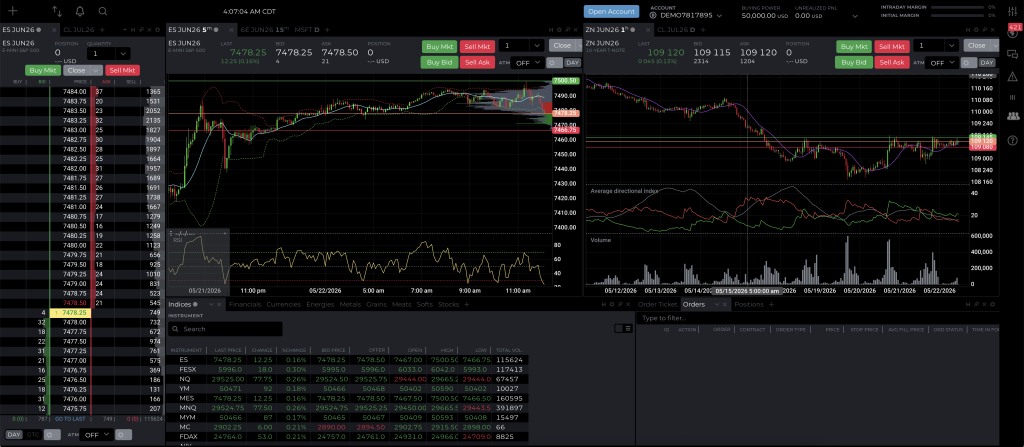
The single most important operational discipline that emerges from these four platform profiles is the weekly restart requirement: cTrader’s memory growth and NinjaTrader’s inability to flush memory mid-session both make scheduled restarts non-optional for continuous operation.
The RAM Stacking Table and Tier Math
The four platform memory profiles combine into a stacking math that determines which VPS plan can hold which platform combination. Windows Server 2022 idle consumes 1.0 to 1.2 GB before any platform launches, and that baseline applies regardless of which platforms run on top. The table below documents the four most common multi-platform stacks with their idle consumption, expected drift after 24 hours of normal operation, and the minimum VPS plan that holds each stack reliably with operational headroom.
| Platform stack | Idle stack | 24-hour drift | Minimum plan |
| MT4 + MT5 | 1.9 GB | 2.5 to 3.5 GB | 4 GB |
| MT5 + cTrader | 2.1 GB | 3.5 to 4.5 GB | 6 GB |
| MT4 + MT5 + cTrader | 2.3 GB | 4 to 6 GB | 6 GB minimum, 8 GB safe |
| MT4 + MT5 + cTrader + NinjaTrader 8 | 2.5 GB | 5 to 8 GB | 8 GB |
The idle stack column represents total RAM consumption immediately after all platforms launch and load their default charts. The 24-hour drift column represents realistic steady-state consumption after a typical trading day with tick history accumulated, indicators loaded, and cTrader’s monotonic memory growth taking effect. The minimum plan column accounts for both Windows Server overhead and the 25 percent free RAM operational margin recommended for trading workloads (sustained RAM usage above 75 percent reduces system responsiveness during news events).
Two structural points follow from the table. First, disk paging on a forex VPS is operationally fatal because it adds tens of milliseconds of latency to tick processing precisely when the system needs to respond fastest, which is during volatility events when platforms hit OnTick simultaneously. Plans that look adequate at idle but cannot hold the 24-hour drift figure will eventually page to disk regardless of how the trader configures the platforms. Second, NinjaTrader’s official 8 GB requirement is the vendor’s stated minimum for NinjaTrader alone. Running NinjaTrader alongside the three other platforms requires more than NinjaTrader’s solo minimum, because all four platforms compete for the same physical RAM. Traders running heavy indicator loads, multiple instruments on NinjaTrader, or simultaneous backtesting alongside live trading need 12 GB or 16 GB to operate without thrashing.
Sub-2 GB plans are a category error for this audience. FXVM Lite at 1.5 GB and similar budget tiers cannot hold Windows Server 2022 plus even two trading platforms after 24 hours of normal memory drift. No plan below 4 GB appears in the comparison table or in any provider section’s recommended tier.
The Broker-Hub Conflict and Why Two Regional VPS Often Beats One
The framework sections so far have treated VPS sizing as a resource problem. The location problem is structurally different and frequently misunderstood. Single-platform traders pick a VPS region by identifying their broker’s MetaTrader server location and selecting a VPS in the same data center metro area. Multi-platform traders running different brokers on different platforms face two or three simultaneous location constraints, and no single VPS can satisfy all of them.
The physics that no VPS can solve. A trader running MT5 with a broker hosted in Equinix LD4 (Slough, west of London) and cTrader with a broker hosted in Equinix NY4 (Secaucus, New Jersey) faces a round-trip of approximately 59 milliseconds between the two facilities. This figure is the documented fastest New York to London latency, achieved via the Equinix Hibernia Express trans-Atlantic cable system. The 59 ms is the speed of light through fiber across the Atlantic Ocean plus the necessary network equipment. No VPS upgrade closes this gap. No provider’s high-frequency network optimizes around it. A trader picking a London VPS achieves sub-2 ms latency to LD4 and roughly 60 ms to NY4. A trader picking a New York VPS gets the reverse.
Multi-platform traders have three workable approaches. The first is to prioritize the latency-sensitive strategy. If MT5 runs a scalping EA on EURUSD with sub-second hold times and cTrader runs end-of-day swing trades on GBPJPY, locate the VPS near the MT5 broker hub. The 60 ms penalty to the cTrader broker is operationally invisible for hold times measured in hours or days because the latency adds approximately 0.06 seconds to entry and exit timestamps that the strategy does not depend on. The decision rule: if your platform’s hold time is more than 60 seconds, the LD4-to-NY4 latency gap is not a meaningful execution cost.
The second approach is to accept a compromise hub. Amsterdam (Equinix AM3 or AM5) and Frankfurt (Equinix FR2) provide approximately 7 to 12 ms to LD4 and approximately 75 to 85 ms to NY4. Neither location is optimal for either broker, but both are acceptable for non-scalping strategies on both. The trade-off is roughly 10 ms slower than optimal to LD4 and roughly 25 ms slower than optimal to NY4. Both differences are imperceptible for swing and position trading. Both are operationally fatal for scalping.
The third approach is to run two regional VPS instances. A trader running MT5 in London and cTrader in New York provisions two VPS instances, one in each region. Each VPS handles the platform whose broker matches its location. Two VPSForexTrader Smart plans at $25.59 per month annual each totals $51.18 per month, which is cheaper than one VPSForexTrader Max plan at $59.99 per month. The two-VPS approach delivers near-optimal latency to both brokers, splits the resource load across two physical instances, and provides provider redundancy as a side benefit. If one VPS fails, the other continues running independently, which a single-VPS setup cannot offer regardless of plan tier.
The decision rule is simpler than it appears. If your brokers are in the same metro area, one VPS in that metro is the correct answer and a larger plan handles the resource scaling. If your brokers are in different metro areas and your strategies on both platforms have hold times under 60 seconds, two regional VPS is structurally better than any single VPS regardless of price. If your brokers are in different metro areas but your strategies tolerate 30 to 60 ms of additional latency, one compromise-location VPS is the cheapest workable option.
The hidden operational benefit of the two-VPS approach is provider redundancy. A trader running two VPS at different providers survives any single-provider outage. The August 2025 ThinkHuge outage that took both FXVM and ForexVPS.net offline simultaneously for approximately 24 hours is the cautionary example: traders running both brands as a redundancy pair found out that the two brands share parent company infrastructure. Two VPS from genuinely different providers do not have this dependency.
NinjaTrader Licensing and Total Cost of Ownership
Multi-platform traders considering NinjaTrader need to add the platform licensing cost to their VPS budget. NinjaTrader is the only platform in this guide that charges a license fee for live trading. MT4, MT5, and cTrader are all free from the broker.
NinjaTrader currently offers three live tiers: Free (simulated trading only, no live order routing), Monthly Lease at $99 per month per broker, and Lifetime at $1,499 one-time. Multi-broker licensing adds $99 per month on top of the lease tier. The monthly versus lifetime breakeven sits at approximately 12 to 15 months for a single-broker license. Past promotional discounts ($999 single-broker, $1,399 multi-broker Christmas promos) are discontinued as of May 2026. Data feeds are required separately for live trading and cannot be bundled by a VPS provider. Rithmic, CQG, and Kinetick are the standard options, priced between $50 and $100 per month depending on exchange coverage and depth-of-market data included.
All-in monthly cost. A trader running NinjaTrader alongside MT4, MT5, and cTrader on a single 8 GB VPS faces approximately the following monthly costs: VPS plan $60 to $80, NinjaTrader Monthly Lease $99, multi-broker add-on if applicable $99, data feed $50 to $100. Total: $209 to $378 per month, depending on the lease tier and feed configuration. Replacing the monthly lease with the $1,499 lifetime license reduces the recurring cost to $110 to $180 per month after the upfront purchase amortizes over the first year.
Strategic context. Kraken acquired NinjaTrader for $1.5 billion, announced in March 2025 and closed in May 2025. Existing licenses remain valid per Kraken’s official statement. The strategic roadmap is now Kraken-aligned, with crypto integration as the primary direction. This is relevant context for traders weighing the $1,499 lifetime commitment, because the platform’s product direction may evolve over the next 12 to 24 months in ways that current futures and equities traders cannot fully predict.
The Five Providers, Evaluated Against the Framework
Each provider below offers at least one plan tier that genuinely handles the multi-platform workload. Plans below 6 GB RAM are excluded because they cannot hold a three-platform stack reliably. All latency figures assume the VPS and broker are deployed in the same Equinix facility or metropolitan area; outside that context, these numbers do not apply. Verify current specs and terms with each provider before purchasing.
| Provider | Plan | RAM | vCPU | Storage | $/mo annual | Trial / Refund |
| VPSForexTrader | Boost | 6 GB ECC | 6 EPYC | 180 GB NVMe | $41.24 | $0.99/3d + 14-day refund |
| VPSForexTrader | Max | 8 GB ECC | 8 EPYC | 250 GB NVMe | $59.99 | $0.99/3d + 14-day refund |
| ForexVPS.net | Prime | 8 GB | 6 | 200 GB | $64 | 7-day refund |
| MT4 + MT5 TradingFXVPS | HFT Expert | 8 GB | 4 | 50 GB NVMe | $75 (~$900/yr) | $3.99/7d + 30-day refund |
| AccuWeb Hosting | Forex VPS 4 | 8 GB | 4 | 50 GB SSD | $59.99 | 7-day refund |
| BeeksFX | Gold | 6.5 GB | 4 | 75 GB | £97 (~$123) | Not published |
VPSForexTrader, Best for Three- and Four-Platform Stacks
Infrastructure tier: Retail proximity hosting at Equinix NY2, LD3, Amsterdam Serverius, HK4, Vilnius.
Operator: HOSTLINE UAB, Lithuania, operating since April 2011.
The resource floor for three platforms is 6 GB RAM with dedicated CPU cores and NVMe storage. The floor for all four platforms including NinjaTrader 8 is 8 GB. Providers offering smaller plans for multi-platform setups are mismatching the workload. VPSForexTrader’s Boost and Max plans sit exactly at these two tiers, with ECC RAM and Equinix presence that competitors at similar price points do not match.
The Boost plan at $41.24 per month annual provides 6 AMD EPYC vCPUs, 6 GB ECC RAM, and 180 GB NVMe storage on Windows Server 2022 Standard. This is the sweet spot for three-platform stacks: MT4 plus MT5 plus cTrader, with operational headroom for one heavy indicator load or a weekend backtest run. The 6 vCPU allocation absorbs cTrader’s multi-threaded .NET runtime and MT5’s per-EA thread spawning during news events without queuing ticks. The Max plan at $59.99 per month annual scales to 8 vCPUs, 8 GB ECC RAM, and 250 GB NVMe storage, which is the realistic floor for adding NinjaTrader 8 to the stack. The 8 vCPU count matters specifically for NinjaTrader because each instrument NinjaTrader follows is assigned to a separate CPU thread; a multi-instrument NinjaTrader setup running alongside three other platforms during high volatility can saturate fewer-core plans.
ECC RAM is unusual at this price point and matters more for multi-platform setups than single-platform. Each platform writes to memory continuously: MT4 updates indicator buffers, MT5 maintains its tick database, cTrader caches market data, NinjaTrader logs strategy state. The probability of a bit-flip error somewhere in this combined memory footprint is meaningfully higher than for a single platform’s smaller working set. ECC catches and corrects these errors automatically; non-ECC RAM passes them through, which can manifest as a phantom indicator value, a corrupted trade log, or in rare cases a platform crash.
The five locations (New York, London, Amsterdam, Hong Kong, Vilnius) cover the broker hubs most multi-platform traders need. Equinix NY4 and LD4 are where IC Markets, Pepperstone, FxPro, LMAX, and most major retail brokers concentrate. When the VPS is placed in the same metro area as the broker, latency in the 1 to 5 ms range is realistic, but always conditional on broker infrastructure rather than a blanket guarantee. The $0.99 three-day trial allows real-world latency validation with the trader’s specific brokers before annual commitment, which is operationally critical for multi-platform setups where two or three different broker latencies need to be tested simultaneously.
VPSForexTrader’s five locations are fewer than ForexVPS.net’s twenty-two. Traders with brokers in Frankfurt, Singapore, Tokyo, or other secondary hubs may find ForexVPS.net’s broader coverage operationally necessary. What VPSForexTrader delivers that ForexVPS.net does not at comparable price points: ECC RAM on all plans, the $0.99 three-day trial, and a no-termination-on-trading-days policy that prevents service suspension during Monday-to-Friday market hours regardless of billing status. VPSForexTrader Max at $59.99 per month annual versus ForexVPS.net Prime at $64 per month annual delivers the same 8 GB tier at a slightly lower price with ECC RAM, but with five locations versus twenty-two. For traders running brokers split across two regions, the two-VPS approach changes the math entirely: two VPSForexTrader Smart plans at $25.59 per month annual each totals $51.18 per month, cheaper than any 8 GB single-VPS plan in this guide while delivering near-optimal latency to both broker locations.
Strengths
ECC RAM on all plans including the Boost and Max multi-platform tiers, which is unusual at this price point; AMD EPYC processors with NVMe storage; Windows Server 2022 Standard licensed and pre-installed; Equinix NY2 and LD3 presence in the same facilities as major broker matching engines; $0.99 three-day trial for real-world latency validation with multiple brokers; 14-day money-back guarantee; no-termination-on-trading-days policy; free weekly backups on Smart and Boost, daily on Max; DDoS protection included; crypto payments accepted; Smart plan at $25.59 per month annual makes the two-regional-VPS strategy financially viable.
Limitations
Five locations is fewer than ForexVPS.net’s twenty-two; traders with brokers outside New York, London, Amsterdam, Hong Kong, or Vilnius will not find optimal coverage; the specific AMD EPYC processor model and DDR generation are not disclosed on the pricing pages; no Linux option; trading platforms are not pre-installed with broker-specific branding, requiring manual installation via RDP; the 99.99 percent SLA is referenced in third-party aggregator listings but not prominently displayed on the provider’s own pricing pages.
ForexVPS.net, Broadest Location Coverage for Split-Broker Setups

Infrastructure tier: Retail proximity hosting across 22 global locations. Operator: ThinkHuge Ltd., Hong Kong. Also operates FXVM.
ForexVPS.net’s contribution to the multi-platform conversation is location coverage. Twenty-two global locations is more than four times what most forex specialist providers offer and is the genuine differentiator that traders with brokers outside the standard NY4-to-LD4 cluster need. The Edge plan at $48 per month annual provides 6 GB RAM, 4 vCPUs, and 150 GB storage for three-platform setups. The Prime plan at $64 per month annual provides 8 GB RAM, 6 vCPUs, and 200 GB storage for the four-platform tier. Both plans run on Windows Server, include DDoS protection, and offer a 7-day refund window.
The location list spans New York, London, Amsterdam, Frankfurt, Zurich, Stockholm, Warsaw, Moscow, Istanbul, Dubai, Mumbai, Singapore, Hong Kong, Tokyo, Sydney, Auckland, and additional secondary cities. For traders running brokers in Tokyo with a parallel cTrader broker in Frankfurt, or NinjaTrader with a CME futures broker in Chicago alongside MT5 with a Cyprus-regulated retail broker in Amsterdam, ForexVPS.net’s coverage addresses the broker-geography problem that providers with five or fewer locations cannot solve. Resource Spike Protection is a documented feature that provides additional CPU and RAM buffer during high-volatility periods.
The critical disclosure is parent company structure. ThinkHuge Ltd. operates both ForexVPS.net and FXVM on shared infrastructure. The August 2025 New York fiber outage took both brands offline simultaneously for approximately 24 hours, confirmed via the public status page that the parent company maintains. Traders using both ForexVPS.net and FXVM as a redundancy pair receive no infrastructure diversity. For multi-provider redundancy strategies, the two brands should be treated as a single provider rather than two independent options.
Strengths
Twenty-two global locations covering the broadest geographic footprint among forex specialist providers; Resource Spike Protection for news-event resilience; Windows Server included on all plans; 8 GB Prime plan at $64 per month annual is competitively priced for multi-platform workloads; 7-day money-back guarantee; established operator with documented infrastructure since 2013; DDoS protection included.
Limitations
CPU architecture, RAM type (ECC versus non-ECC), and storage type (NVMe versus SSD) are not consistently disclosed on plan pages; entry-tier pricing is higher than VPSForexTrader’s equivalent multi-platform tiers (Prime at $64 versus Max at $59.99 for 8 GB); shares infrastructure with FXVM under the same parent company, and the August 2025 simultaneous outage demonstrated that both brands fail together; marketed 100 percent uptime is contradicted by the 99.99 percent SLA in fine print; no free trial, only the 7-day refund window allows real-world validation.
TradingFXVPS, Equinix-Colocated Multi-Platform Hosting with High Single-Thread Performance
Infrastructure tier: Retail proximity hosting at Equinix NY4, LD4, TY3 plus 5 additional locations. Operator: High Frequency Trading Network Pte Ltd, Singapore.
TradingFXVPS positions itself around high single-thread clock speed, which matters specifically for multi-platform setups that include MT4. MT4 is single-threaded per terminal: clock speed per core determines how fast each MT4 instance processes incoming ticks and submits orders. cTrader and NinjaTrader 8 benefit from multiple cores, but MT4’s performance ceiling is set by single-thread speed alone. A Ryzen 9 at 4.3 GHz, if accurate, would deliver the highest single-core performance in this guide.
The HFT Expert plan at approximately $75 per month on annual billing (around $900 per year) is the realistic multi-platform tier, providing 8 GB RAM, 4 vCPUs, and 50 GB NVMe storage. The HFT Advanced plan at approximately $45 per month is a 4 GB option suitable for MT4 plus MT5 stacks but undersized for adding cTrader or NinjaTrader. Eight locations span Equinix NY4, LD4, TY3, Amsterdam, Frankfurt, Chicago (CME Aurora), Hong Kong, and Singapore. The three Equinix broker hubs (NY4, LD4, TY3) put TradingFXVPS in the same buildings as major retail broker matching engines, which is genuine colocation rather than metropolitan proximity.
The verification gap matters for multi-platform traders specifically. The Ryzen 9 9950X processor referenced in TradingFXVPS marketing content does not appear on plan pages, and the DDR5 RAM claim is not independently verifiable. The HFT Expert and Advanced tiers default to Windows Server 2019 or 2022, but entry tiers (Standard and Standard+) default to Windows Server 2016, which is approaching end of extended support and is operationally suboptimal for NinjaTrader 8 setups that expect current .NET Framework 4.8 service stack updates. The 30-day money-back guarantee is the longest refund window in this guide, which provides extended real-world validation time for multi-platform setups where memory drift behavior needs 72 hours to manifest.
Strengths
Hardware positioning matches multi-platform requirements where MT4 single-thread performance and multi-platform core distribution both matter; Equinix NY4, LD4, and TY3 colocation in the same facilities as major broker matching engines; eight global locations including Tokyo and Chicago for traders with futures or APAC broker requirements; 30-day money-back guarantee, the longest refund window in this guide; $3.99 seven-day trial; NVMe storage at the multi-platform tier; provider-published broker-specific latency figures consistent with the underlying Equinix cross-connect architecture (commercially motivated).
Limitations
Ryzen 9 9950X claim appears in marketing content but not on plan pages, preventing independent hardware verification; DDR5 RAM claim is not verifiable; ECC RAM is not specified at any tier; entry and Standard+ tiers default to Windows Server 2016, which is approaching end of extended support and requires explicit upgrade for NinjaTrader-inclusive setups; storage at 50 GB on the HFT Expert plan is among the smallest in this guide, and multi-platform setups with all four platforms accumulate substantial log and tick database files over time; HFT Expert at $75 per month is the most expensive 8 GB tier in this guide outside of BeeksFX.
AccuWeb Hosting, US-Based Veteran with Multi-Platform Pre-Installation
Infrastructure tier: Retail proximity hosting across 16+ global locations. Operator: AccuWeb Hosting Inc., US-based, founded 2003.
AccuWeb is the longest-operating provider in this guide and the only one offering pre-installation of all four trading platforms at setup. For traders new to multi-platform hosting or those who want to minimize setup friction across four different installer downloads, this is a genuine operational advantage. The Forex VPS 4 plan at $59.99 per month provides 8 GB RAM, 4 vCPUs, and 50 GB SSD storage on Windows Server 2019, 2022, or 2025 (selected at setup). MT4, MT5, cTrader, and NinjaTrader 8 can all be pre-installed on request, with documented installation guides for each platform available on the AccuWeb support portal.
Sixteen-plus global locations span London, Denver, New York, Frankfurt, Tokyo, Singapore, and other major metros. The geographic breadth is comparable to ForexVPS.net, though the specific data centers are AccuWeb’s own facilities rather than the Equinix LD4 and NY4 buildings where major retail brokers concentrate. The practical latency implication is that an AccuWeb New York instance reaches a broker in NY4 across the metropolitan network rather than within the same facility, which typically adds 5 to 10 milliseconds compared to directly colocated providers. For multi-platform setups where execution speed sensitivity is moderate (day traders, swing traders, EA portfolios that depend on consistent operation rather than millisecond execution), this difference is acceptable. For scalpers running across multiple platforms simultaneously, it matters.
The published SLA is 99.90 percent network uptime, which equals 8.76 hours of permitted annual downtime, explicitly below the 99.99 percent standard set by forex-specialist providers in this guide. The fully managed support tier is general IT server administration rather than MetaTrader, cTrader, or NinjaTrader specific expertise, which means support can handle Windows updates, RDP troubleshooting, and resource monitoring competently, but platform-specific issues (EA errors, cBot configuration, NinjaScript debugging) typically route to broker support or the platform vendor’s community instead. The 7-day money-back guarantee covers standard plans; no free trial is available.
Strengths
Pre-installation of all four trading platforms (MT4, MT5, cTrader, NinjaTrader 8) at setup, the only provider in this guide offering all four; Windows Server 2019, 2022, or 2025 licensing included on all plans; sixteen-plus global locations; no setup fees on standard plans; 24/7 managed server support included; operating since 2003, the longest-running provider in this guide; 7-day money-back guarantee; both Windows and Linux options available; complimentary weekly backups in London, Denver, and New York data centers.
Limitations
Data centers are AccuWeb’s own facilities rather than Equinix LD4 and NY4 colocated buildings, typically adding 5 to 10 milliseconds of latency versus directly colocated providers; 50 GB SSD storage on the Forex VPS 4 plan is the only entry in this guide that specifies SSD rather than NVMe, which matters for simultaneous platform startup time and disk I/O during weekly restart cycles; 99.90 percent SLA is explicitly below the 99.99 percent standard (8.76 hours versus 52.6 minutes of permitted annual downtime); ECC RAM not specified at any tier; no free trial available; fully managed support is general IT server administration rather than trading platform specific expertise.
BeeksFX, Institutional Infrastructure for Premium Multi-Platform Requirements

Infrastructure tier: Institutional retail proximity hosting at Equinix LD4, NY4, TY3, Frankfurt, Chicago, Hong Kong. Operator: Beeks Group plc, LSE-listed (BKS). Founded 2011.
BeeksFX is the only provider in this guide that operates at genuine institutional infrastructure tier. The Beeks Group is publicly traded on the London Stock Exchange, holds ISO 27001 and SOC 2 certifications, and maintains over 400 dedicated fiber cross-connects to more than 200 trading venues including direct connections to LMAX, CME matching engines, LSE, and major FX liquidity providers. For retail multi-platform traders, this institutional positioning is overkill. For prop firm traders, institutional retail clients, and traders requiring FIX gateway connectivity alongside their multi-platform setups, BeeksFX is the only realistic option in this guide.
The Silver plan at £55 per month (approximately $70) provides 4 GB RAM, 2 vCPUs, and 50 GB storage with pre-installed MT4 and cTrader/cAlgo support. The Gold plan at £97 per month (approximately $123) scales to 6.5 GB RAM, 4 vCPUs, and 75 GB storage. Neither plan reaches the 8 GB tier that all four platforms genuinely require, which is a structural limitation for retail multi-platform traders. The retail VPS catalogue exists at BeeksFX primarily as an entry point to the institutional Proximity Cloud and Exchange Cloud products, which start at significantly higher price points but include dedicated cross-connects and bare-metal options that no other provider in this guide offers.
BeeksFX operates in Equinix LD4, NY4, TY3, Frankfurt FR2, Chicago, and Hong Kong, covering most major broker hubs. The infrastructure differentiation is real: where every other provider in this guide offers shared proximity hosting (the VPS sits in the same building as the broker but traverses shared switching fabric), BeeksFX offers dedicated cross-connects on institutional tiers that bypass the shared network entirely. For latency-sensitive multi-platform strategies depending on consistent execution across multiple brokers, this institutional capability is meaningful, though the retail Silver and Gold tiers do not include it.
Strengths
Over 400 dedicated cross-connects to 200+ trading venues on institutional tiers; documented sub-millisecond round-trip latency to CME matching engines from Aurora colocation; LSE-listed public company with audited financials; ISO 27001 and SOC 2 certified; pre-installed MT4 and cTrader/cAlgo on retail tiers; six locations covering major broker hubs including LD4, NY4, TY3, Frankfurt, Chicago, and Hong Kong; institutional Proximity Cloud and Exchange Cloud products available for traders who outgrow retail tiers.
Limitations
Retail Silver (4 GB) and Gold (6.5 GB) tiers do not reach the 8 GB threshold that all four trading platforms genuinely require, so multi-platform traders with NinjaTrader in the stack need to upgrade to institutional tiers at substantially higher price points; Gold plan at £97 per month (approximately $123) is roughly 2 to 3 times the price of comparable retail-tier plans from VPSForexTrader and competitors; GBP pricing only, which adds currency conversion friction for non-UK customers; no published trial or refund policy on retail tiers; dedicated cross-connects and bare-metal options that justify the BeeksFX positioning are available only on institutional tiers, not on the retail Silver and Gold plans evaluated here; CPU architecture, RAM type, and storage type are not consistently disclosed on retail plan pages.
Common Mistakes When Buying Multi-Platform VPS
The most common failure mode is sizing for the idle stack instead of the 24-hour drift. A trader who provisions a 4 GB VPS because the idle stack of MT4 plus MT5 plus cTrader is 2.3 GB discovers by the second day that cTrader’s monotonic memory growth and MT5’s tick database accumulation have pushed total usage past 5 GB, the operating system has started paging to disk, and tick processing latency has degraded by tens of milliseconds. The minimum plan column in the RAM stacking table accounts for the drift figure and the 25 percent operational margin, and those numbers are the right ones to size against.
The second mistake is assuming two ThinkHuge brands provide redundancy. ForexVPS.net and FXVM are both operated by ThinkHuge Ltd. on shared infrastructure. The August 2025 New York fiber outage took both brands offline simultaneously for approximately 24 hours. A trader running primary infrastructure on one brand and backup infrastructure on the other received no diversity. Real redundancy requires providers from different parent companies operating in different physical data centers with different upstream network providers. A two-VPS pair like VPSForexTrader and TradingFXVPS, or VPSForexTrader and AccuWeb, satisfies this requirement.
The third mistake is picking a compromise-location VPS for a scalping strategy. Amsterdam or Frankfurt give acceptable latency to both LD4 and NY4 for swing and position trading, but the 25 ms penalty to NY4 is operationally fatal for scalping strategies with sub-minute hold times. The decision rule from the broker-hub conflict section is the right filter: if any platform on the VPS runs a strategy with sub-60-second hold times, the compromise hub is wrong and two regional VPS instances are structurally better than one.
The fourth mistake is forgetting NinjaTrader’s licensing sits on top of the VPS budget. The $99 per month lease (or $1,499 lifetime) plus $50 to $100 per month for data feeds turns a $60 VPS plan into a $209 to $378 per month total cost. Multi-platform traders who size their budget against the VPS plan alone discover the licensing math after the trial period ends. The all-in monthly figure is the right one to budget against, not the headline VPS price.
The fifth mistake is skipping the weekly restart configuration. cTrader’s memory growth is monotonic and NinjaTrader cannot flush memory mid-session. Without a Sunday-night restart configured via Task Scheduler before the Asian session opens Monday at 22:00 GMT, both platforms accumulate memory until the VPS is thrashing. This is not optional in production multi-platform setups, and it is the single most common cause of unexpected performance degradation in week-two of a new VPS deployment.
Decision Framework for Multi-Platform Setups
The framework sections established the resource math, the location math, and the cost math. This section maps specific trader profiles to specific plans so readers can route their decision without rebuilding the analysis.
Two-platform stacks, single hub
For MT4 plus MT5, VPSForexTrader Smart at $25.59 per month annual provides 4 GB ECC RAM and 3 AMD EPYC vCPUs, the realistic floor for two MetaTrader platforms running together. AccuWeb Forex VPS 2 at $14.99 per month is the cheapest alternative if Equinix colocation is not required and the 99.90 percent SLA is acceptable. For MT5 plus cTrader, VPSForexTrader Boost at $41.24 per month annual provides 6 GB ECC RAM and 6 AMD EPYC vCPUs, the sweet spot when one platform (cTrader) is aggressively multi-threaded; the 6 vCPU allocation absorbs cTrader’s .NET runtime during news events without queuing ticks on the MT5 side. ForexVPS.net Edge at $48 per month annual is the alternative when the trader needs ForexVPS.net’s broader location coverage.
All four platforms, single hub
VPSForexTrader Max at $59.99 per month annual is the recommended fit, providing 8 GB ECC RAM, 8 AMD EPYC vCPUs, and 250 GB NVMe storage. ForexVPS.net Prime at $64 per month annual is the close alternative for traders needing the 22-location coverage. AccuWeb Forex VPS 4 at $59.99 per month is the option if multi-platform pre-installation is the priority and the 99.90 percent SLA is acceptable. The 8 GB tier is non-negotiable for this profile; smaller plans cannot hold all four platforms reliably regardless of price.
Split-broker traders, different hubs
Two regional VPS instances rather than one larger plan. Two VPSForexTrader Smart plans at $25.59 per month annual each totals $51.18 per month and delivers near-optimal latency to both broker hubs simultaneously. This approach is cheaper than any 8 GB single-VPS plan in this guide and provides provider redundancy as a side benefit. The mental model: identify which broker each platform connects to, identify the Equinix facility hosting each broker, then provision one VPS per facility with the appropriate plan size for the platforms that connect through that broker.
NinjaTrader-primary multi-platform trader
Two-VPS architecture is structurally better than one bigger VPS. A primary VPS in Chicago close to CME futures matching engines for NinjaTrader (QuantVPS Lite at $41.99 per month is the Chicago-specialist option) plus a secondary VPS in New York or London for MT4, MT5, and cTrader brokers. NinjaTrader’s licensing cost ($99 per month lease or $1,499 lifetime) plus data feeds ($50 to $100 per month) sit on top of the VPS budget regardless of provider choice. Total all-in monthly cost for an NT-primary multi-platform setup typically runs $200 to $350 per month including both VPS instances, NT licensing, and data feeds.
Institutional or prop firm multi-platform trader
BeeksFX Gold at £97 per month (approximately $123) for retail-grade institutional infrastructure with pre-installed MT4 and cAlgo support. For traders requiring genuine FIX gateway connectivity, dedicated broker cross-connects, or bare-metal options, the BeeksFX institutional Proximity Cloud or Exchange Cloud products are the only realistic options in this guide, though pricing scales significantly higher than retail tiers.
Pre-purchase validation checklist
Before committing to annual billing, four specific tests catch most multi-platform VPS mistakes. First, identify the broker server location for each platform via the platform’s settings, then contact each broker to confirm which Equinix facility hosts their matching engine and map the platforms to broker locations. Second, use the trial period to run all platforms simultaneously for at least 48 hours, watching for RAM trend in Task Manager; usage should plateau rather than climb continuously, and any unbounded growth indicates a missing weekly restart configuration. Third, configure a Task Scheduler script restarting cTrader and NinjaTrader every Sunday at 21:00 server time before the Asian session opens. Fourth, contact support with a basic technical question and note response time and quality, because that exchange is effectively a test of the worst-case future emergency response.
Three Findings
There is no universal best VPS for multi-platform trading. The right answer depends on which platforms are in the stack, where the brokers sit, and whether the trader can structurally split the workload across regions. Three findings from this analysis are worth carrying forward.
First, RAM scales near-linearly with platform count, and the 24-hour drift figure is the right number to size against, not the idle stack. MT4 plus MT5 needs 4 GB. Adding cTrader pushes the floor to 6 GB. Adding NinjaTrader 8 pushes it to 8 GB. Plans below those thresholds fail by the second day as memory drift compounds and the operating system starts paging to disk. The RAM stacking table is the load-bearing piece of decision-grade content in this guide and the differentiator competing articles do not provide.
Second, broker hubs may not overlap, and 58.95 ms of unavoidable latency between London and New York is a problem no single VPS can solve. Multi-platform traders running brokers split across regions face three workable approaches: prioritize the latency-sensitive strategy, accept a compromise hub like Amsterdam or Frankfurt, or run two regional VPS instances. For strategies with sub-60-second hold times across both brokers, two regional VPS instances is structurally better than any single VPS regardless of price. Two VPSForexTrader Smart plans at $25.59 per month annual each totals $51.18 per month, cheaper than any 8 GB single-VPS plan in this guide, and provides provider redundancy as a side benefit.
Third, the cleanest fits for the genuine multi-platform tier are VPSForexTrader Boost ($41.24 per month annual, 6 GB ECC, 6 EPYC vCPUs) for three-platform stacks and VPSForexTrader Max ($59.99 per month annual, 8 GB ECC, 8 EPYC vCPUs) for the four-platform tier including NinjaTrader. ForexVPS.net Prime ($64) is the close alternative when 22-location coverage is operationally necessary. AccuWeb Forex VPS 4 ($59.99) is the right choice when multi-platform pre-installation matters more than colocation. TradingFXVPS HFT Expert ($75) is the Equinix-colocated alternative with the longest refund window (30 days). BeeksFX Gold (£97) is the option for institutional retail clients who need ISO 27001 and SOC 2 certification or eventual migration to the Proximity Cloud tier. Where competitors win on specific dimensions, this guide has said so. The decision framework, not the article’s positioning, is what the reader should carry away.
FAQ
Can I run NinjaTrader on a Linux VPS to avoid Windows licensing costs?
No. NinjaTrader 8 requires .NET Framework 4.8 on Windows and is not officially supported on Linux. Wine compatibility exists in theory but is unreliable for production trading; NinjaTrader’s threading model, SQL Server integration, and DirectX dependencies all introduce edge cases that break on non-Windows environments. The licensing savings of $10 to $15 per month for Linux versus Windows hosting are not worth the operational risk for live trading. Traders specifically running cBots on cTrader without other platforms can use Spotware’s free Cloud cBot hosting included with cTrader 5.x as an alternative to VPS hosting entirely, but the cloud hosting does not extend to cTrader desktop, MT4, MT5, or NinjaTrader.
How do I configure Task Scheduler to restart cTrader and NinjaTrader weekly?
Open Task Scheduler on the Windows Server VPS via the Start menu. Create a Basic Task named cTrader Weekly Restart. Set the trigger to Weekly, Sunday, at 21:00 server time. Set the action to Start a program and browse to the cTrader executable path (typically C:\Program Files\cTrader\cTrader.exe). Before that, add a separate task to kill the running cTrader process: action Start a program, program taskkill.exe, arguments /F /IM cTrader.exe. Schedule the kill task 60 seconds before the restart task. Repeat the same pattern for NinjaTrader.exe. The Sunday 21:00 timing is chosen to complete the restart cycle before the Asian session opens Monday at 22:00 GMT.
Does the Kraken acquisition of NinjaTrader affect existing lifetime license holders?
No. Per Kraken’s official statement at the time of the acquisition (closed May 2025), existing NinjaTrader lifetime licenses remain valid and the platform continues to operate under its existing terms. Strategic direction is now Kraken-aligned, with crypto trading integration as the announced primary roadmap focus. The practical implication for current futures and equities traders is unclear: the platform’s product direction may evolve over the next 12 to 24 months in ways that emphasize crypto features over the futures-trading workflows that have historically driven NinjaTrader adoption. Traders considering the $1,499 lifetime purchase versus the $99 per month lease should factor this uncertainty into the breakeven analysis.
What is the practical impact of cTrader’s monotonic memory growth on multi-platform setups?
Without weekly restarts, cTrader’s memory usage climbs from 300 to 500 MB at startup to 1.6 to 2 GB after 72 hours of continuous operation. In a multi-platform setup where cTrader shares RAM with MT4, MT5, and NinjaTrader, this growth compounds against the other platforms’ working sets. By day 4 or 5 without a restart, an 8 GB VPS running all four platforms can reach 7 GB or higher of memory usage, which pushes the system above the 75 percent operational threshold and degrades responsiveness during news events. A Sunday-night restart resets cTrader to its startup baseline and prevents the compounding effect. NinjaTrader 8 has the same operational requirement for the same reason: the platform cannot flush memory mid-session, so weekly restarts are the only way to reclaim accumulated memory.
Can I run multiple platforms with one shared broker account, or do I need separate broker accounts for each platform?
The platforms cannot share broker accounts because each platform connects to a different broker server architecture. MT4 connects to the broker’s MT4 server, MT5 connects to a separate MT5 server, cTrader connects to a Spotware-architecture server, and NinjaTrader connects via FIX or proprietary API to broker-specific gateways. A trader running all four platforms simultaneously typically holds at least three separate broker accounts: one MetaTrader account (which can be linked to both MT4 and MT5 if the broker supports both), one cTrader account, and one NinjaTrader-compatible broker account. Some brokers offer single-account products that span MT4 and MT5 from a single account number, but no broker offers a unified MetaTrader-plus-cTrader-plus-NinjaTrader account.
Can multiple traders share one VPS if I run a small trading group or signal service?
Technically yes, but Windows Server RDP licensing limits concurrent connections. The default Windows Server installation allows two simultaneous administrative connections without additional Client Access Licenses (CALs). Beyond two concurrent users, each additional connection requires a CAL purchase, which adds approximately $40 per user per year to the operational cost. Multi-trader setups also raise security considerations: each user has full RDP access to the entire server, including the other traders’ running platforms and broker credentials. For signal services or small trading groups, a properly architected solution is usually one VPS per trader with a copy-trade utility synchronizing positions between accounts, rather than multiple traders sharing one VPS.
References
- MetaQuotes Software Corp. Release notes for MetaTrader 4 and MetaTrader 5. Build version data, 64-bit transition history, and minimum supported build requirements as of May 2026.
- MQL5 Forum threads on memory consumption and threading models, including thread 386311 on MT5 multi-terminal memory usage and thread 445964 on MT4 single-threaded execution architecture.
- Spotware Systems. cTrader system requirements and platform documentation, accessed via broker-distributed product pages and the community.ctrader.com forums (threads 40124 and 13168 for documented monotonic memory growth).
- NinjaTrader, LLC. Official system requirements for NinjaTrader 8 (minimum 8 GB RAM, .NET Framework 4.8, 2 GHz quad-core 64-bit CPU). NinjaTrader support forum thread 1196651 for the 222 MB blank workspace baseline measured by NinjaTrader staff with Task Manager screenshot.
- SharkIndicators. Computer Selection Guide. Reference for NinjaTrader 8 per-instrument CPU thread allocation and Tick Replay RAM requirements.
- VPSForexTrader: Smart $25.59, Boost $41.24, Max $59.99 per month annual. AMD EPYC, ECC RAM, NVMe, Windows Server 2022. Equinix NY2, LD3, Amsterdam Serverius, HK4, Vilnius. $0.99 three-day trial, 14-day money-back, no-termination-on-trading-days policy. vpsforextrader.com
- ForexVPS.net: Edge $48, Prime $64 per month annual. 22 global locations. Resource Spike Protection feature. 7-day money-back guarantee. Operated by ThinkHuge Ltd., Hong Kong. forexvps.net
- TradingFXVPS: HFT Standard, Standard+, Advanced, Expert plan pricing. Equinix NY4, LD4, TY3, and five additional locations including CME Aurora. $3.99 seven-day trial, 30-day money-back guarantee. Operated by High Frequency Trading Network Pte Ltd, Singapore. tradingfxvps.com
- AccuWeb Hosting: Forex VPS 1 through 4 plan pricing. Windows Server 2019, 2022, 2025 included. Multi-platform pre-installation available on request. 16+ global locations. 7-day money-back guarantee. accuwebhosting.com
- BeeksFX: Silver and Gold retail VPS plans. Equinix LD4, NY4, TY3, Frankfurt, Chicago, Hong Kong. Operated by Beeks Group plc, LSE-listed (BKS). ISO 27001 and SOC 2 certified. beeksgroup.com
- QuantVPS: Chicago-centric VPS specializing in CME futures hosting. Lite plan at $41.99 per month referenced in the NinjaTrader-primary decision profile.
- Equinix. Hibernia Express trans-Atlantic cable system announcement (October 2015 PR Newswire release) documenting sub-58.95 ms round-trip latency between Equinix NY4 (Secaucus) and LD4 (Slough).
- ThinkHuge Ltd. public status page. Documentation of the August 2025 New York fiber outage affecting both FXVM and ForexVPS.net for approximately 24 hours simultaneously.
- Kraken. Acquisition announcement and licensing continuity statement for NinjaTrader (announced March 20, 2025, closed May 1, 2025, $1.5 billion transaction value).
- TradingFXVPS published broker-specific latency figures. Provider-measured rather than independently replicated; cited in the relevant provider section with explicit flagging.
- ForexVPS.net latency study cross-referenced from the previous Cheapest MT5 VPS article. Single-source, commercially interested, not independently replicated. Referenced for the directional finding that VPS-to-broker distance affects slippage, not the specific magnitude.
Editorial Note
This guide is published on vpsforextrader.com, operated by HOSTLINE UAB. VPSForexTrader is included among the five evaluated providers and is positioned as the strongest fit for the three-platform and four-platform multi-platform hosting categories. The same evaluation criteria apply equally to all providers in this guide; where competitors win on specific dimensions, the article states so directly. ForexVPS.net’s 22-location coverage exceeds VPSForexTrader’s five locations. AccuWeb is the only provider in this guide offering pre-installation of all four trading platforms. BeeksFX is the only provider operating at genuine institutional infrastructure tier. TradingFXVPS offers the longest refund window (30 days).
All pricing, plan specifications, location coverage, and operational policies are based on publicly available vendor documentation reviewed in May 2026. Pricing changes frequently in this category; verify current pricing at the provider’s website before purchase. Latency claims from all providers in this guide, including VPSForexTrader, are commercially motivated and have not been independently replicated. The article treats specific numbers as directional rather than authoritative. Traders evaluating any provider should validate actual latency to their specific brokers via the available trial periods before annual commitment.
SLA percentages cited throughout are billing commitments rather than trading insurance products. SLA credits, when paid out, typically refund hosting fees for the downtime period only and do not compensate for trading losses caused by VPS unavailability or platform downtime. ForexVPS.net and FXVM are both operated by ThinkHuge Ltd.; the August 2025 New York fiber outage affecting both brands simultaneously is publicly documented and the two brands should be treated as a single provider rather than two independent options for redundancy purposes.
This article evaluates VPS infrastructure for retail multi-platform trading workloads. It does not constitute financial advice, trading recommendations, or guarantees about trading outcomes. A VPS can reduce network-layer latency between trading terminals and broker matching engines. It cannot guarantee execution quality, improve strategy performance, or eliminate broker-side processing delays. Decisions about which broker to use, which platform to deploy, and which trading strategy to run are independent of the VPS hosting decision and require separate evaluation outside the scope of this guide.